Featured Documentary
Engaging the Imagination:
Wally’s Way
37 minutes | 2025
Educational Documentary
Our Story
About the Film
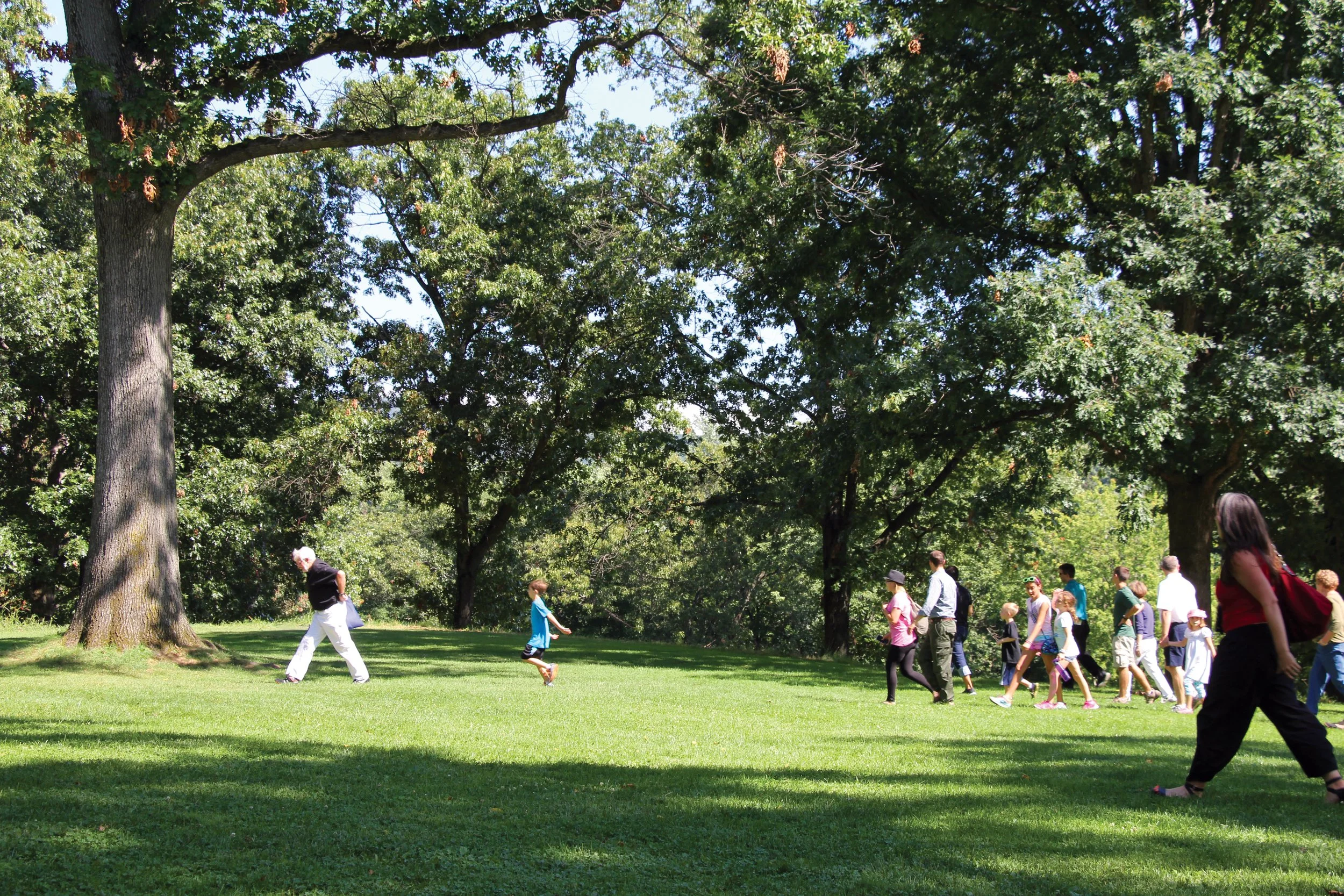
Engaging the Imagination: Wally’s Way follows artist and art educator Wally McGuire as he introduces children and adults to abstract sculpture through observation, imagination, movement, and personal connection. Rather than asking viewers to identify a single correct interpretation, Wally invites them to notice carefully, make connections, and become active participants in the conversation begun by the artist.
Developed through decades of work in classrooms and museums, Wally’s approach helps viewers experience art through what he calls “making a heART connection with art.” Dr. Sandra I. Kay recognized the educational significance of the method and led the effort to preserve it in documentary form. The completed 37-minute film is now available internationally through educational streaming services including Learn360, Classroom Video on Demand, Films on Demand, and Access Video on Demand, with individual licenses and DVD copies available through Films Media Group.
Wally’s Way and access options
Companion interview, Wally’s Why
Seeing As an Act of Creation
Wally’s approach transforms viewing from passive observation into creative participation. Learners combine what they notice through their senses with memory, imagination, and personal experience to make new connections with abstract art.
Dr. Kay describes this combinatory process as creative viewing. Here observation becomes a viewer’s act of creation by engaging one’s imagination to produce new-to-them ideas. By generating possibilities, making connections, and responding personally to what they encounter, viewers begin developing the creative viewing skills—including aesthetic preferences—that help them recognize what feels meaningful, fitting, or beautiful.
Making a heART Connection
At the center of Wally’s approach is a deceptively simple invitation: “Make a heART connection with art.”
Rather than beginning with explanation or interpretation, learners are invited to notice what attracts their attention, search for clues, make associations, and test possibilities. Sensory perception, memory, knowledge, and imagination become resources for constructing meaning.
For Dr. Kay, this process illustrates something larger: aesthetic understanding develops through experience. As learners notice what captures their attention and discover what feels meaningful to them, they begin to recognize their own aesthetic preferences—the patterns of response that help curiosity and wonder grow into sustained creative engagement.
The Story of Wally’s Way
For more than 40 years, artist and educator Wally McGuire developed and field-tested ways of helping people make a personal connection with works of art. Dr. Sandra I. Kay recognized the value of capturing Wally’s approach on film so that it could be shared with learners and educators beyond the museum setting.
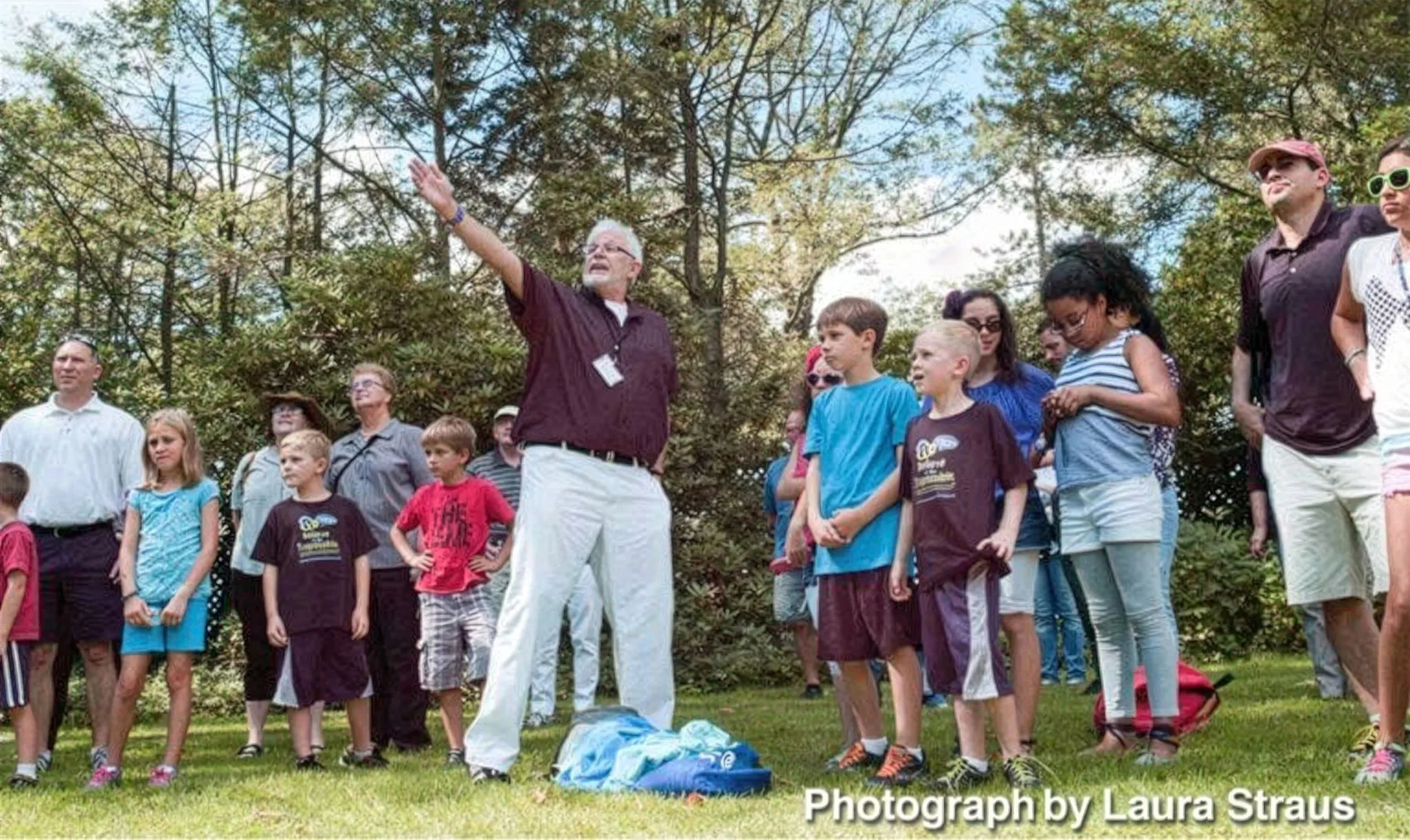
With early encouragement from Eliot Eisner, Maxine Greene, and Al Hurwitz, Sandra assembled an interdisciplinary creative team to develop Engaging the Imagination: Wally’s Way, an educational documentary centered on Wally’s approach to “Making a HeART Connection with Art.” Most of the film was created at Storm King Art Center in New York.
Film Timeline
Engaging the Imagination: Wally’s Way was itself the product of years of observation, collaboration, experimentation, fundraising, filming, and refinement. The project brought together educators, artists, filmmakers, supporters, and audiences committed to preserving and sharing Wally McGuire’s distinctive approach to creative observation.
Explore the project timeline →
-
2010
Sandra Kay received permission from Storm King Art Center to create the documentary.
The Independent Production Fund agreed to serve as fiscal sponsor after viewing an early sample.
Friends, colleagues, and former learners provided the project’s first grassroots financial support.
Cinematographer Declan Quinn, editor Allyson Johnson, and Alexandra Lescaze joined the creative team.
The Orange County Office of Tourism awarded a $1,500 seed grant.
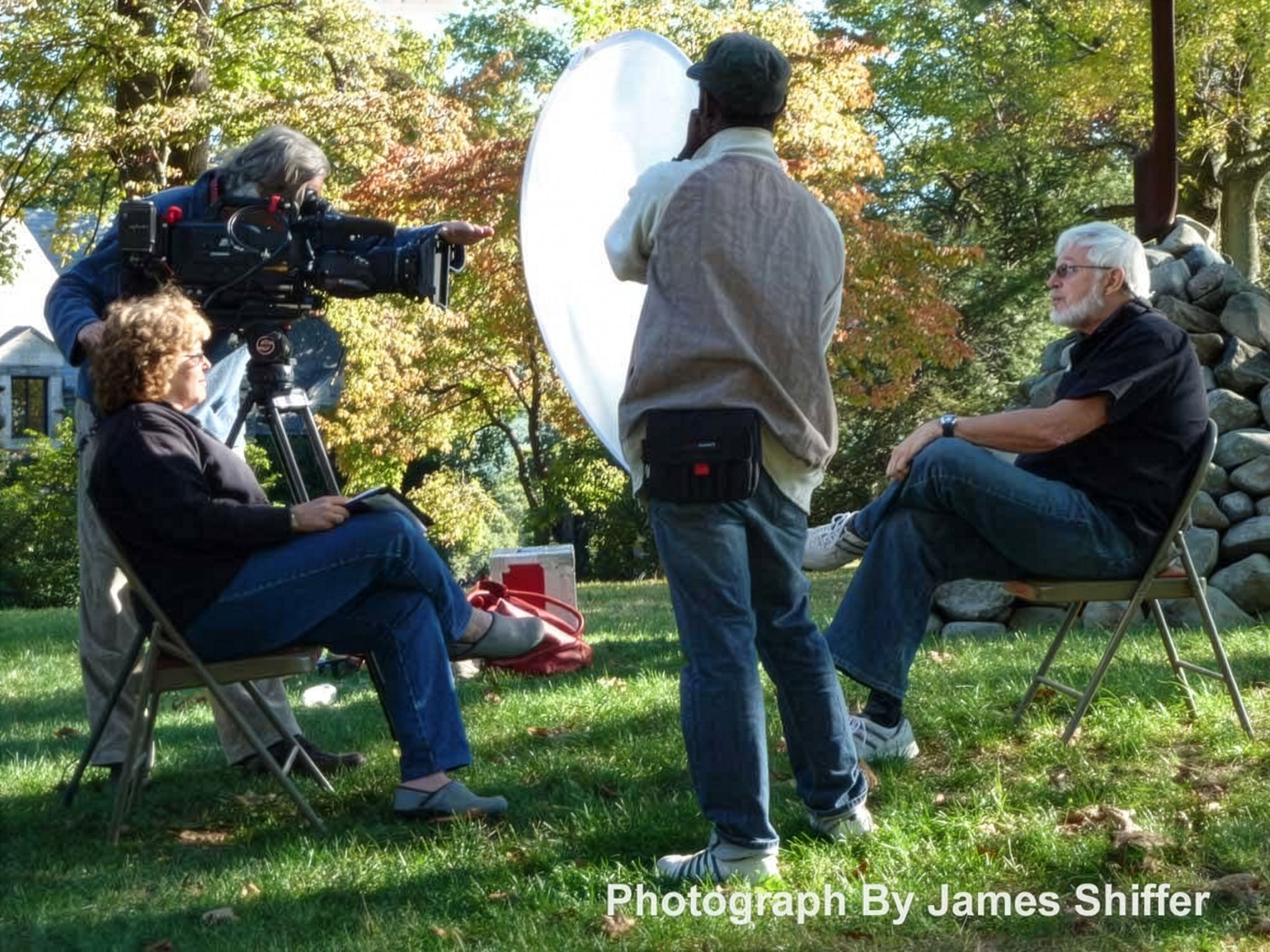
Two of Wally’s tours were filmed at Storm King in October 2010, along with an additional day devoted to footage of the sculpture park.
2011
Permissions were sought from the artists and representatives whose work appeared in the film; living artists waived their image-use fees.
Audiences in art education, gifted education, and creativity research began field-testing the project.
Funding supported creation of a two-minute fundraising trailer.
Jaci Canning and Lee Murphy became the first members of the project’s Advisory Council.
2012
Legal agreements were developed to protect the project and receive donated funds.
Allyson Johnson professionally edited the first 15 minutes of a rough cut for grant applications.
The Jacob Burns Film Center offered to host a future rough-cut screening for audience feedback.
The team pursued grant opportunities and began exploring additional editorial support.
-
2013
The original Wally’s Way website launched.
Rockland Center for the Arts offered to host a screening when the film was ready.
Interviews were filmed with artist Roland Gebhardt and dancer Tamara Pullman to explore how Wally’s methods reflected authentic creative processes.
The Advisory Council expanded, and photographer Laura Straus contributed still photography.
Tom Porpiglia joined as editor and work on the rough cut continued.
2014
Art advisor Jaci Canning was filmed discussing Wally’s methods and her work connecting art and collectors.
Additional sculpture photography was gathered.
Two 90-minute filmed tours were shaped into a 44-minute rough cut.
The film was piloted with focus groups around the country who had never experienced Wally’s teaching in person. Feedback informed further revisions.
2015
Wally’s interview was edited.
A montage combining three interviews responding to Wally’s method was developed.
A “wish-list” version of the documentary was reviewed and approved by Wally, Advisory Council members, and editors.
Archival research, copyright permissions, and continued fundraising moved the project toward its final form.
-
2016
The film underwent legal review for fair use and final image permissions.
The team revised the documentary where licensing costs made particular images impractical.
Sharon Vatsky, then Director of Education at the Guggenheim Museum, NYC, was interviewed in response to the rough cut.
Some original music was developed for the film.
Work began on detailed film credits identifying individual sculptures and directing viewers toward additional information about the artists.
2017
The Sharon Vatsky interview was prepared as an additional chapter.
Fundraising efforts continued.
2018
A trailer featuring four professional interviews was created for the website.
The team continued seeking grants and other sources of support.
2019
Ryan Kakeh joined the project as an editorial assistant.
A beat sheet was created to guide the final editing process.
Wally recorded voiceover material for the film’s opening.
The team continued seeking funding partners and identified an editor who could continue the work in 2020.
-
2020–2022
Credits and permissions for the 23 artists represented in the film were reviewed and updated.
Earlier and current editors collaborated to address technical problems in the original footage.
James refined the film’s visuals and created original music for its opening and transitions.
In 2022, the rough cut was presented at the Southern Oregon University International Creativity Conference as part of a presentation on the project’s collaborative, interdisciplinary process.
Museum representatives expressed interest in the completed film, while discussion increasingly drew attention to the role of empathy in Wally’s approach.
The team researched distribution options for schools, libraries, and art museums, including both DVD and streaming formats.
2023
Work turned toward identifying and contacting distributors.
Pacing issues and other editorial recommendations were taken on by James Mielke when time permitted.
-
Presenting the rough draft of the film to national education/creativity conferences such as the National Art Educators Association,National Association for Gifted Children, and Southern Oregon’s International Creativity Conference, gave us audience feedback that was both very encouraging and constructive while we hunted for post-production funds and a distributor.
The operative word for this part of the journey was perseverance. With a file cabinet drawer filled with grant applications, we had nothing. Educational documentaries are not even a category in the film industry. Speaking of ‘film industry’, we learned at the end of this that it was going through a major upheaval during our journey!
Our former student and acclaimed, award winning electronic game designer James Mielke stepped forward to volunteer his editorial expertise to rectify some pacing issues, etc. to get it done. Of course he could only work on it in between major projects in his extensive network of enterprises.
A major educational documentary distributor and our dream/wish had provided wonderful interest and feedback in 2024 but could only take on STEM-related materials. A year later when the STEAM movement surfaced to the general public, my request to her for recommendations of companies interested in STEAM immediately garnered an offer as this concept was on hers. She sent the old version which they had kept in their files to the new k-12 coordinator and we had a contract proposal without them ever seeing all the corrected pacing! It felt really satisfying to have the lead of a company immediately remember the rough cut and jump on it if an Instructional guide on STEAM could be included. After legal review, the contract was signed in August 2025 with a due date for the end of the year to get all the post-production work done.
Joe Schroeder of Independent Production Fund basically took me by the hand, providing lists of professional editors, colorists, sound and composer expertise. Advisory Council member Ken Topolsky helped me choose. In addition, we needed to hire a specialist to rebuild the program that James had been working with as it began to disintegrate about the same time as the contract was signed. Lots of theories as to why flew around, but the expert who knew all these programs and rebuilt it for us said that the timing of the disintegration coincided with something Apple did or removed or something. No clue. What matters is that working with Joy Reed, Eric Jacobs, Dave Gauff, and Peter Rundquist in post-production redefined what a productive creative team ought to aspire to become! Their generosity in reduced fees merits gratitude as well.
Funding you ask? A request for additional contributions added a third of what was needed. You know who you are, again thank you! Now at the age when one was forced to take funds from one’s retirement (RMD’s), the rest was covered in 2025-2026 (lawyer for E&O insurance, etc.) It allowed delivery on a promise to this huge collaborative effort. Together we can bring the joy of Wally’s ‘making a heart connection with art’ to so many others!
For Educators
Bring Wally’s Way into the Classroom
Engaging the Imagination: Wally’s Way was designed as more than a film to watch. The accompanying instructor’s guide offers a STEAM-based framework for using the film to develop creative observation, inquiry, aesthetic literacy, and interdisciplinary thinking. It includes connections to educational standards as well as adaptable lesson extensions for continued exploration.